The Calder Valley in the Age of Industry
Halifax, in the West Riding of Yorkshire, sits in the Calder Valley - a landscape of steep hillsides and fast-running water that gave it, before coal and steam, the natural conditions for textile production. By the early nineteenth century, water-powered and then steam-powered mills had made the valley one of the productive centres of the Industrial Revolution. The town itself grew rapidly and not gracefully. In 1843 Halifax was described as a “mass of little, miserable, ill-looking streets, jumbled together in chaotic confusion.”1
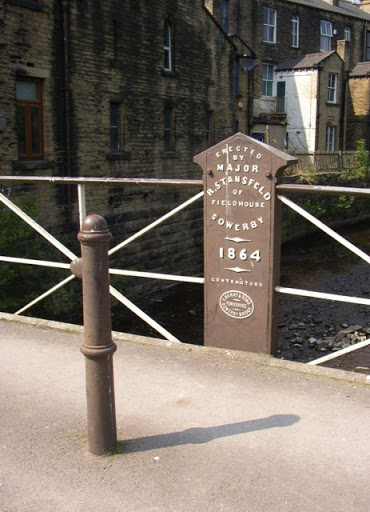
A few miles west along the Calder, the village of Sowerby Bridge was growing almost as fast. By 1845 it had expanded from a scattering of houses at the start of the century into a town of some 5,000 people, described by Samuel Lewis as “a spacious street of well built houses, about a mile in length, and of numerous detached and pleasant villas - the whole has an aspect of cheerfulness and prosperity.”2 It was in this environment - the engineering needs of a rapidly industrialising West Riding - that Francis Berry made his living.
Francis Berry and the Calder Vale Iron Works
Francis Berry (c. 1788-1857) was an iron founder, established at Sowerby Bridge from 1832.3 There was steady demand in the valley for skilled ironwork: the machinery that drove the woollen mills, the bridges that crossed the Calder, the infrastructure of an industrialising north all required it.
Francis initially established a small foundry at the bottom of West Street.3 As the business grew, Calderdale Works, in Walton Street was developed. In addition to the original building, extensions and a new workshop were built. William, Robert, Francis, and daughter Ann were taken into partnership.3 Calder Vale Iron Works became the firm of Messrs. Francis Berry and Sons45 and by mid-century the firm had grown from a modest operation into a respected name in the West Riding of Yorkshire.6
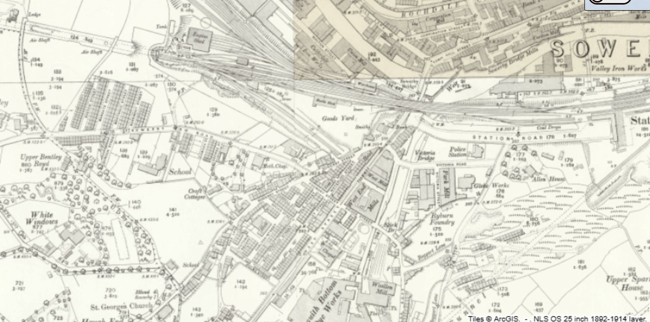
Francis and his wife Elizabeth (Hoosen) raised a family of five children. Their sons Robert, William, and Francis Jr. were each drawn into the family trade. Their daughter Ruth died aged 30 at the end of August 1849 after the birth of her son William in July 1849. Their other daughter Ann also appears to have died quite young as she is not living with her husband and son in the 1871 census. The family’s financial circumstances improved with the business. In 1841 Francis and Elizabeth were living at West End, Sowerby, overlooking the foundry yard.3 By 1861 the household had moved to 1 Caldervale House, Sowerby Bridge.8
Death and Legacy
Francis died in 1857, leaving a business that his sons would continue and expand under the name F. Berry & Sons. His death did not interrupt the firm’s operation - the foundry on Walton Street continued to trade, and by the 1890s the works had grown to cover between five and six acres of buildings. The firm built connections abroad and in England, specialising in heavy machinery needed for shipbuilding and repairing. There was a saying that “Berry’s machines could be found in practically every shipyard around the British Isles.”3
His descendants’ story runs in two directions from that Calder Valley foundry: sons and grandsons who continued the ironwork in Yorkshire, and others who carried the family name - and something of its enterprise - to the Australian colonies.